

Advance Traffic Management
India’s deepening
road safety crisis, with over 1.68 lakh lives lost in 2022, underscores the
urgent need for an integrated, well-coordinated strategy. Under the leadership
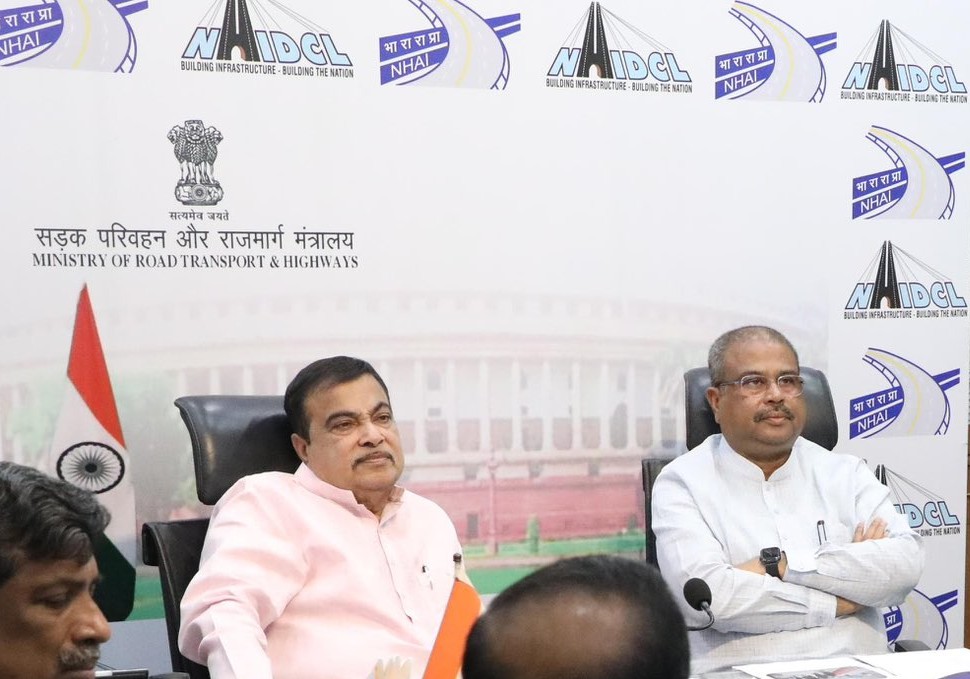
of Union Minister Shri Nitin Gadkari, the Ministry of Road Transport and
Highways has introduced commendable reforms including the Motor Vehicles
(Amendment) Act, 2019, the Sadak Suraksha Abhiyaan, and more recently,
collaborative efforts with the Ministry of Education to integrate road safety
into school curricula. These initiatives reflect a clear ministerial commitment
to legal, educational, and behavioural change. However, the absence of
institutional convergence between Centre and States continues to stall
meaningful transformation. This article calls for a national-level framework
that is centrally envisioned yet locally adapted, with active
inter-departmental coordination and state-led execution.
Keywords : Road Safety, Central-State Coordination, Driver Training and Licensing, Sadak Suraksha Abhiyaan, Ministerial Initiatives.
In India today, road
safety is no longer a sectoral issue—it has emerged as a public health and
national security challenge. The numbers speak for themselves. In 2022, a total
of 4,61,312 accidents were reported, leading to 1,68,491 fatalities and 4,43,366
injuries, as per the Ministry of Road Transport and Highways. This translates
to 53 accidents and 19 deaths every hour—a brutal reality playing out across
our highways, urban junctions, and village roads alike.
The age group
between 15 and 49 years, the most economically productive segment, remains the
worst affected. The consequences are not only personal tragedies but also
national losses—lives, livelihoods, and labour, all wasted on account of
preventable accidents.
The central
government, led by Shri Nitin Gadkari, has been assertive in bringing road
safety into mainstream governance. Measures such as enhanced penalties under
the Motor Vehicles (Amendment) Act, 2019, and awareness campaigns like the
Sadak Suraksha Abhiyaan, reflect a robust push to improve compliance and public
awareness. But the road from policy to pavement remains riddled with gaps.
One key intervention
is the joint initiative between MoRTH and the Ministry of Education, led by
Shri Dharmendra Pradhan. The move to integrate road safety values within school
education is both forward-thinking and necessary. Creating a generation that respects
road discipline is perhaps the only long-term answer to the behavioural gaps
seen among Indian drivers. But such efforts will fall short unless state
governments assume ownership and translate intent into effective school-level
action.
Equally pressing is
the condition of India’s driver licensing and training system. In most states,
acquiring a licence remains a procedural formality—rarely a true test of road
readiness. Many drivers lack exposure to essential practices such as defensive
driving, hazard anticipation, or basic emergency response. Driving schools,
where they exist, often prioritise clearance over competence. This results in a
road environment dominated by underprepared and often reckless drivers.
This systemic
failure must be addressed by overhauling the licensing architecture. Accredited
Driver Training Centres, backed by practical simulations and behavioural
training, should become mandatory. Drivers must be evaluated on real-world
capability, not just theoretical knowledge or scripted manoeuvres.
Meanwhile,
infrastructure remains a chronic pain point. Roads with poor geometrics,
unclear signage, broken medians, and dangerous blackspots continue to take
lives. State governments must treat infrastructure rectification as a
continuous safety obligation, not just a budgetary item. A safety-oriented
approach to road design, responsive traffic management, and the deployment of
technology-based enforcement tools—such as AI cameras, real-time violation
tracking, and blackspot analytics—must become standard practice.
The task at hand is
not just technical—it is institutional. States like Tamil Nadu and Maharashtra
have shown the benefits of cross-sector coordination. Their success stems from
data-led task forces involving transport, police, health, and urban departments,
aligned toward clear safety goals. Such collaborative governance models must be
replicated nationwide.
Even as the Union
Ministry continues to push reforms from above, state-level readiness to adapt
and enforce remains the decisive factor. Policies—whether around stricter
penalties, automated enforcement, or awareness campaigns—must be customised for
urban and rural contexts alike. One-size-fits-all prescriptions will not work
in a country of India’s scale and diversity.
The sharp rise in
fatalities in 2022 must serve as a turning point. The current
path—well-intended but fragmented—is insufficient. India needs a unified
national road safety architecture that ensures central vision is translated
into state action, with clear accountability mechanisms.
To save lives and
preserve national productivity, India must do more than legislate—it must
implement, enforce, and educate with equal intensity. Public awareness,
technological augmentation, and robust driver training form the three
foundational pillars. The fourth, and perhaps most critical, is state-level
execution under a nationally aligned framework.
Without this
alignment, the vision of “Safe Roads for All” will remain aspirational—its
realisation held back not by policy gaps, but by the absence of systemic
follow-through.